Othello
Why Does This Gullible Brute Elicit Our Sympathy?
Intro

Shakespeare’s Othello; a timeless story of a mildly gullible man in power, being expertly manipulated by the true super-villain Iago, into questionably justified domestic violence and uxoricide (the killing of one’s wife). We watch as Iago leads this powerful man down a well-crafted path of jealousy, betrayal, and mistrust, putting him smack dab in the middle of a classic “fragile male ego” crisis. Iago expertly plays multiple characters and innocent situations to benefit his own end goal of revenge. By the end of the tale, we have heard Othello call his wife Desdemona a whore and strikes her (Othello, 4.1 87-210). He then murders her with a speech about how it is what he must do (Othello, 5.2 1-20). Why, after we have seen his vaguely pathetic gullibility and unfounded violence, do we still sympathize with this character? There are a few reasons we sympathize with literary or film characters that show undesirable traits, or act in ways that we might not excuse in real life.
Gullibility

First, lets explore the more forgivable aspects of the character Othello, his gullibility. Iago is able to slowly erode Othello’s confidence in the loyalty of his wife and friend Cassio. There is a name for the method that he uses, The Reed Method. Police officers use this to interrogate and glean confessions from suspects. First, they pretend to be your friend, as Iago did in Act 1 Scene 2 by pretending to be concerned for Othello’s safety and the state of his marriage. He feigned loyalty. He then plants fear in his mind, being careful to allow Othello to draw is own conclusions, similar to the above-mentioned interrogation tactic. (NPR, The Science of Gullibility page 4-5) We as the audience know what is really going on, we see the manipulation and trickery and we inherently feel sorry for the poor man being manipulated by those he trusts. We can all relate to that feeling in one way or another and it makes him more relatable and sympathetic.
Fundamental Attribution Error
Othello develops into quite the brute. He becomes increasingly jealous and impulsive. He is a man scorned by his wife Desdemona. And while the indiscretion that has enraged him never happened, it is of no consequence to Othello. In his mind, he has been betrayed in the most humiliating way possible. We see all of this play out and has sympathy for him thanks to something called Fundamental Attribution Error. “The fundamental attribution error is the tendency to attribute another person’s behavior to their internal characteristics as opposed to the situation they are in at the time” (Kassin, Fein, and Markus 118). This basically explains that if we know more about a character’s motivations, their backstory, we are more likely to see things from their point of view and the author is able to elicit our sympathy (Keen, McCoy, and Powell 131). Once Iago is found out, Othello voices his regret, and this further confirms the audience’s theory that while Othello acted in a villainous way, he was in fact a victim.
Sympathy and Justice
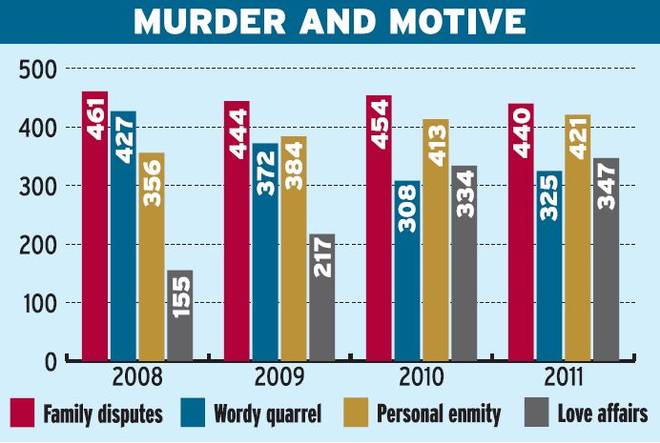
This phenomenon is not limited to the page, stage or silver screen. We see examples of sympathy for perpetrators of violence in our criminal justice system. A person who commits murder can have the charges reduced to manslaughter if the following conditions are met: 1. There was adequate provocation 2. It must have occurred in “the heat of the moment” 3. That the loss of control seemed “reasonable” enough that anyone in that position may have done the same thing (Matlock, 371). And while this defense is only a partial defense for the murder of another human being, it still seems archaic and ill-informed. For some reason, society feels sympathy for a person who commits an act of violence out of a complete loss of self-control. Life imitating art, or vice-versa?
Conculsion
We, the audience, can see the turmoil and absolute heartbreak Iago has crafted for Othello. Those emotional connections we have experienced with this man allow us to sympathize with his character. Mitigating circumstances changing our perspective on heinous acts is nothing new. Humans crave understanding and to be understood. By expressing a character’s motivations, we can even be manipulated into sympathizing with a brute like Othello. I’m not sure if this is a good quality. On one hand, it shows our capacity for empathy. On the other hand, it rewards those who cannot control their ego or behavior.
Works Cited
Shakespeare, William. Othello, edited by Barbara A. Mowat and Paul Werstine, Simon & Schuster Paperbacks, 1993/2017, 171-265.
Matlock, Nicole A.K. Reasonable Rage: The Problem with Stereotypes in Provocation Cases, 6 Wash. U. Jur. Rev. 371 (2014). Available at: https://openscholarship.wustl.edu/law_jurisprudence/vol6/iss2/5
Keen, Richard & Mccoy, Monica & Dunaway, Elizabeth. (2012). Rooting for the Bad Guy: Psychological Perspectives. Studies in Popular Culture. 34. 129-148. 10.2307/23416402.
Kassin, Saul, Steven Fein, and Hazel Markus. Social Psychology: 8th edition. Boston: Houghton Miffl in, 2011. Print.
NPR. The Science of Gullibility: Why We Get Duped. January 9, 2019. https://www.npr.org/transcripts/99160094
Follow My Blog
Get new content delivered directly to your inbox.
 Lora Keyte